
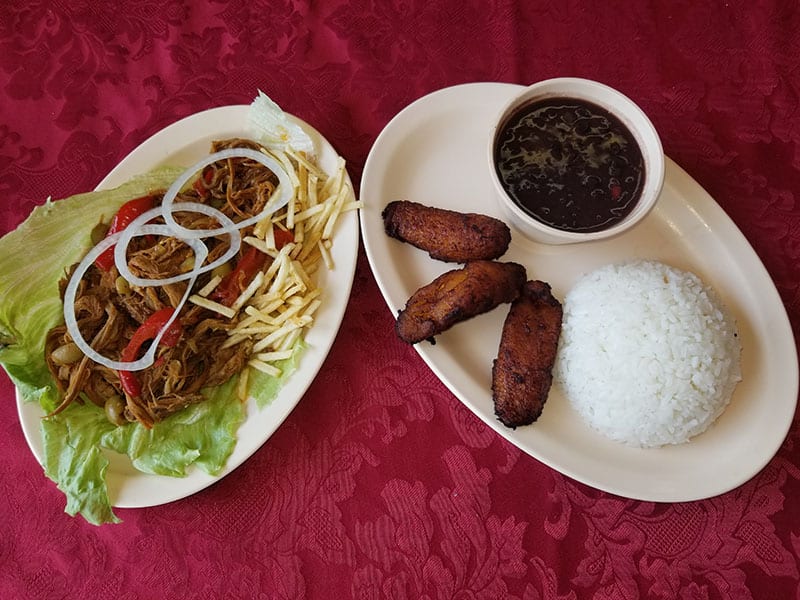
Ropa Vieja vs. Vaca Frita vs. Picadillo: Cuba's Three Beef Classics Explained
Pull up a stool at the counter and take a look at our menu. You'll see three Cuban beef dishes that first-timers always ask about: ropa vieja, vaca frita and picadillo. They're all beef. They're all classics. And they're all completely different once they hit the plate.
If you grew up eating them, you already know which one your abuela made on Sundays. If you're new to Cuban food, here's the friendly rundown from our family to yours.
Three Dishes, Three Personalities
Think of these three as cousins. Same family, same roots, very different personalities.
- Ropa vieja is the storyteller — slow, saucy, tender.
- Vaca frita is the loud one — crispy, garlicky, bright with lime.
- Picadillo is the everyday favorite — the one you grew up eating on a Tuesday night.
Let's break each one down.
Ropa Vieja: "Old Clothes" That Taste Brand New
The name literally means "old clothes," because the shredded beef looks like a pile of colorful rags once the peppers and onions get mixed in. Don't let the name fool you — this is one of the great dishes of Cuban cooking, and it's the unofficial national dish of Cuba.
We start with flank or skirt steak, simmer it low and slow until it falls apart, then shred it and cook it down in a sofrito of tomatoes, onions, bell peppers, garlic, cumin, oregano, bay leaf and a splash of dry white wine. The finished dish is saucy, savory and slightly sweet from the peppers.
At Capri Bakery & Restaurant, we serve ropa vieja over congrí (black beans and rice cooked together) with maduros (sweet plantains) on the side. If you like a little heat, add a few drops of hot sauce. If you're a first-timer, order it plain first — the sauce is the whole point.
You can also grab it as a sandwich — the D' Ropa Vieja on pressed Cuban bread is one of our quiet favorites.
Vaca Frita: Crispy, Garlicky, Bright
"Vaca frita" means "fried cow." Yes, really. And it's every bit as good as it sounds.
Here's the fun part: vaca frita starts almost the same way ropa vieja does. Same cut of beef, boiled until tender, then shredded. But instead of drowning it in sauce, we marinate the shredded beef in garlic, lime juice and salt, then throw it on a hot griddle until the edges get crispy and a little charred. Right before it comes off, we top it with sautéed onions and a fresh squeeze of lime.
That's the whole trick. Same beef, totally different dish.
Ropa Vieja vs. Vaca Frita in one sentence: ropa vieja is saucy and stewed, vaca frita is crispy and grilled with garlic and lime.
If you can't decide between the two, order vaca frita on a first visit. That crackly, citrusy, garlicky bite is the flavor most people remember and come back for. It's the reason our slogan is El Que Prueba Vuelve — whoever tries it, comes back.
Picadillo: The Weeknight Hero
Picadillo is the one Cuban kids grow up on. Ground beef braised with onions, bell peppers, garlic, tomato sauce, cumin and — here's the magic — green olives, raisins and diced potatoes. That sweet-salty-savory combo is unmistakable.
It's called picadillo a la criolla on our menu, and it comes with rice, beans and a side. Most people go with white rice and maduros so they can spoon the picadillo over the rice and let the sauce soak in. The olives are salty, the raisins are sweet, the potatoes are soft — every bite is a little different.
Kids love it. Parents love it. It's comfort food, plain and simple.
Which One Should You Order First?
Depends on who you are at the counter today.
- Never had Cuban food before? Start with vaca frita. It's the wow-factor dish.
- Love a rich, saucy stew? Ropa vieja, all day.
- Feeding kids or want something easygoing? Picadillo.
- Can't choose? Order the Trío — beef, chicken and pork on one plate. Or bring a friend and share.
All three come with your choice of rice (congrí, white or yellow), beans and a side. The classic Cuban combo is congrí and maduros, but tostones (fried green plantains) or yuca con mojo are just as traditional. You can't go wrong.
A Quick Word on the Beef
People sometimes ask if ropa vieja and vaca frita really use the same cut. Traditionally, yes — flank or skirt steak, boiled or slow-simmered until it shreds. What changes everything is what happens next: the sauce for ropa vieja, the griddle for vaca frita. Picadillo skips the shredding entirely and uses ground beef instead. Three techniques, three dishes, one family of flavors.
If you want to dig deeper into Cuban dishes and what to pair them with, take a look at our [Cuban food guide](https://capribakeryandrestaurant.com/cuban-food-guide/). And when you're ready to eat, the full [menu is here](https://capribakeryandrestaurant.com/menu/).
Prices and availability subject to change.
Come Try All Three
We've been on Southern Blvd in West Palm Beach since 1986, and these three beef classics have been on the menu the whole time. Family recipes, cooked the way the Alfonso family cooked them back in Cuba.
Come sit down at a table, grab a cafecito after, and see which one becomes your regular order. Order pickup by calling (561) 655-1602, or get delivery through DoorDash, Uber Eats, Grubhub or Seamless.
Capri Bakery & Restaurant · 817 Southern Blvd, West Palm Beach, FL 33405 · (561) 655-1602